
By Maisie Jeffreys
Want support to achieve strategic systems change in your organisation? Contact us to explore our consultancy services!
Systems change is more than a buzzword – it’s a growing imperative for organisations navigating today’s complex, interdependent world. Whether tackling climate action, health equity, or social justice, achieving meaningful transformation requires not just a strong strategy or innovative programmes, but the right governance structures to steward change.
Designing the Right Structures
Designing a governance structure for an organisation tackling the complex, messy world of systems change can be challenging. We want to be functional, effective, stable, adaptable – all whilst empowering those with lived-experience to lead, shape and sustain meaningful change. It doesn’t matter if you’re a grassroots, national or international organisation – this is
Centering Lived Experience in Governance
Incorporating lived experience into governance involves:
- Creating Inclusive Spaces: Establish forums where individuals with lived experience can share insights and influence decision-making.
- Representation in Governance Bodies: Ensure that governance structures include members who bring firsthand perspectives, enriching discussions with real-world understanding.
- Active Participation in Decision-Making: Empower staff and community members with lived experience to take part in shaping policies and practices.
- Continuous Feedback Mechanisms: Implement systems to regularly gather and act upon feedback from those directly affected by governance decisions.
“Good governance is putting people at the center of the development process.”— Narendra Modi
Balancing Stability and Flexibility
To achieve this balance:
- Emphasise Procedural Fairness and Participation: Implement transparent and inclusive processes to build legitimacy and trust.
- Utilise Substantive Standards Over Rigid Rules: Adopt flexible standards that allow for discretion and adaptability in decision-making.
- Incorporate Psychological and Social Considerations: Design governance structures that address the needs of communities, ensuring changes are perceived as legitimate and fair.
- Foster Continuous Learning and Adaptation: Establish mechanisms for ongoing evaluation and learning to adapt policies in response to new information.
- Design Legal Frameworks to Support Adaptive Governance: Create legal structures that allow for procedural adjustments and incorporation of new knowledge over time.
Embracing Participatory Democracy
“Democracy is not a spectator sport, it’s a participatory event. If we don’t participate in it, it ceases to be a democracy.”
— Michael Moore
Participatory democracy emphasises the active involvement of citizens in governance. By embedding diverse and distributed leadership, managing complexity with integrity, and prioritising learning over control, organisations can build alignment without requiring uniformity.
Design Legal Frameworks to Support Adaptive Governance
Create legal structures that facilitate adaptive governance by allowing for procedural adjustments and the incorporation of new knowledge over time.
This approach isn’t about reinventing governance from scratch but about evolving it to meet the needs of complexity and change.
Decentralised Governance
Systems change is inherently multi-actor and multi-level. Top-down control doesn’t work in complex, dynamic environments. That’s why many organisations are shifting toward decentralised governance models – distributing authority across networks, regions, or stakeholder groups and empowering those with lived experience to take control over decisions that affect them.
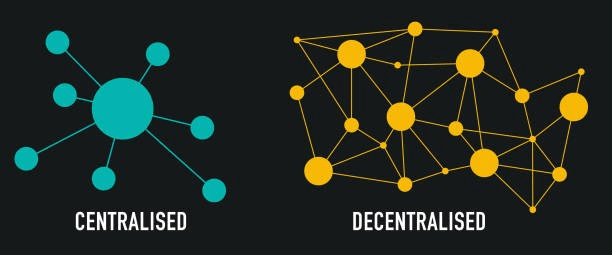
source: https://www.linkedin.com/pulse/decentralization-revolution-shaping-future-governance-noman-ul-haq
This isn’t just about structure – it’s about trust, learning, and letting go of power:
- Encouraging local autonomy and innovation
- Building in feedback loops across teams and partners
- Sharing leadership so decisions reflect diverse experiences and knowledge
Decentralised governance supports emergence – allowing new ideas, relationships, and strategies to develop organically, rather than being predetermined from the centre. This, in turn, supports systemic change that is aligned with lived realities.
The Human Side of Governance: Internal Politics & Personal Practice
Governance isn’t just technical – it’s deeply relational and psychological, especially when we hold the power to influence decisions and organisational change. As individuals, we each bring our own relationship and personal history to power, risk, and change into the governance spaces we occupy. Whether we’re on a board, in a leadership team, or part of a collective, our ability to govern well is shaped by our inner being.
Therefore, it’s vital that we’re aware of our own personal history, biases and positions of power when governing. We must ask ourselves:
- How do I respond to uncertainty?
- What power am I holding and how am I using it?
- Do I create space for challenge and difference or default to comfort and consensus?
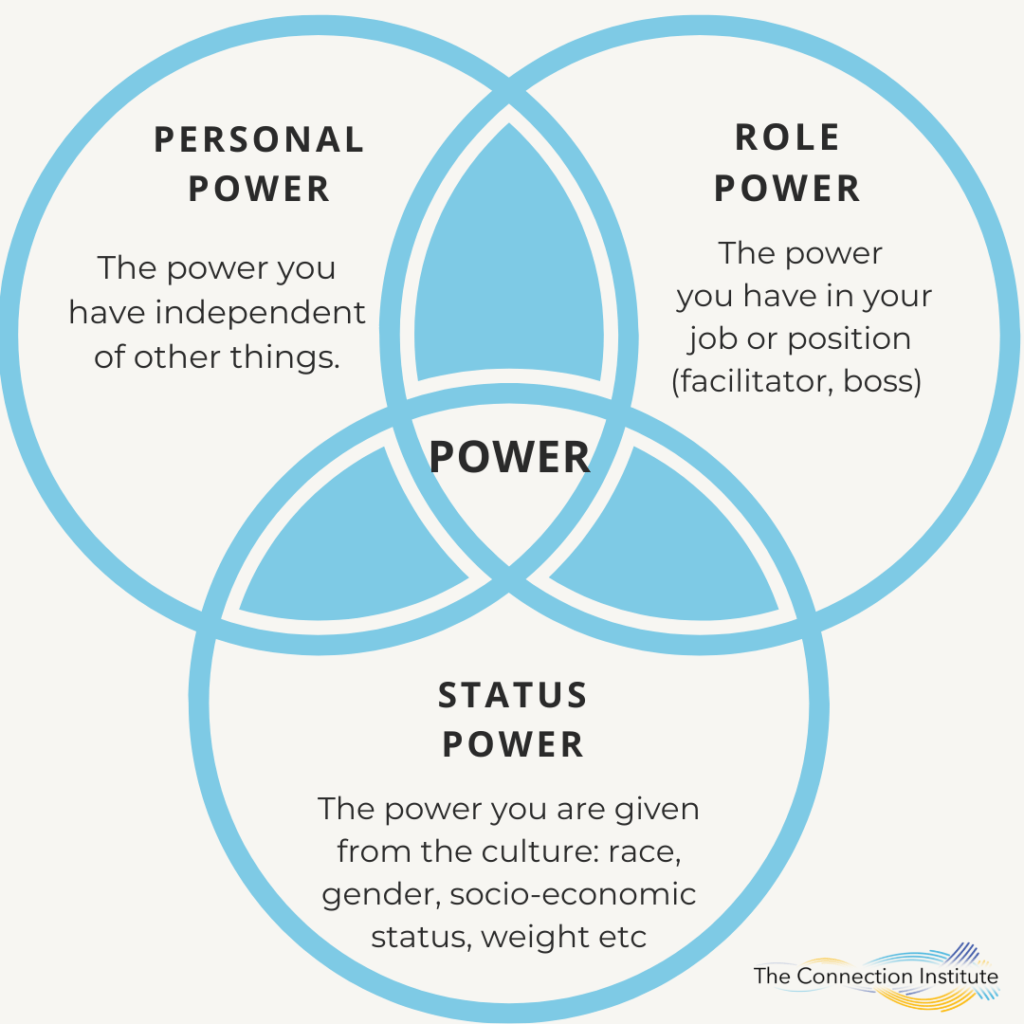
source: https://theconnectioninstitute.net/the-3-types-of-power-and-why-they-matter/
Even when designing governance systems in mind, it’s important to ask ourselves what personal assumptions or biases might we be brining into our design. For example, inherent racial biases in our culture may underpin assumptions that certain minority groups lack the skills or capacity to be involved in governance structures, and they may be excluded as a result.
Effective governance for systems change requires a culture of reflection, curiosity, and self-awareness. It’s about how we “show up” as people – not just policies.
This means governance bodies in systems change organisations need to be composed of the right people. We need people who are able to reflect and ask these questions; who can step back and see the bigger vision of change, whilst planning and pushing forward action. Everything is about balance.
“Words without action is useless, and action without words is confusing!”–Kenneth Yu
Final Thought
Systems change is hard work. It requires vision, courage, and the patience to hold ambiguity. But without governance structures that are both principled and flexible, organisations risk falling back into old patterns – centralisation, rigidity, or superficial reform.
Let’s design governance for the systems we want to change – and for the futures we want to build.
 A Systems Lens
Leave a comment